Natural vs Man-Made Ice Caves in Iceland: What´s the difference?
What is the difference between a natural vs man-made ice cave?
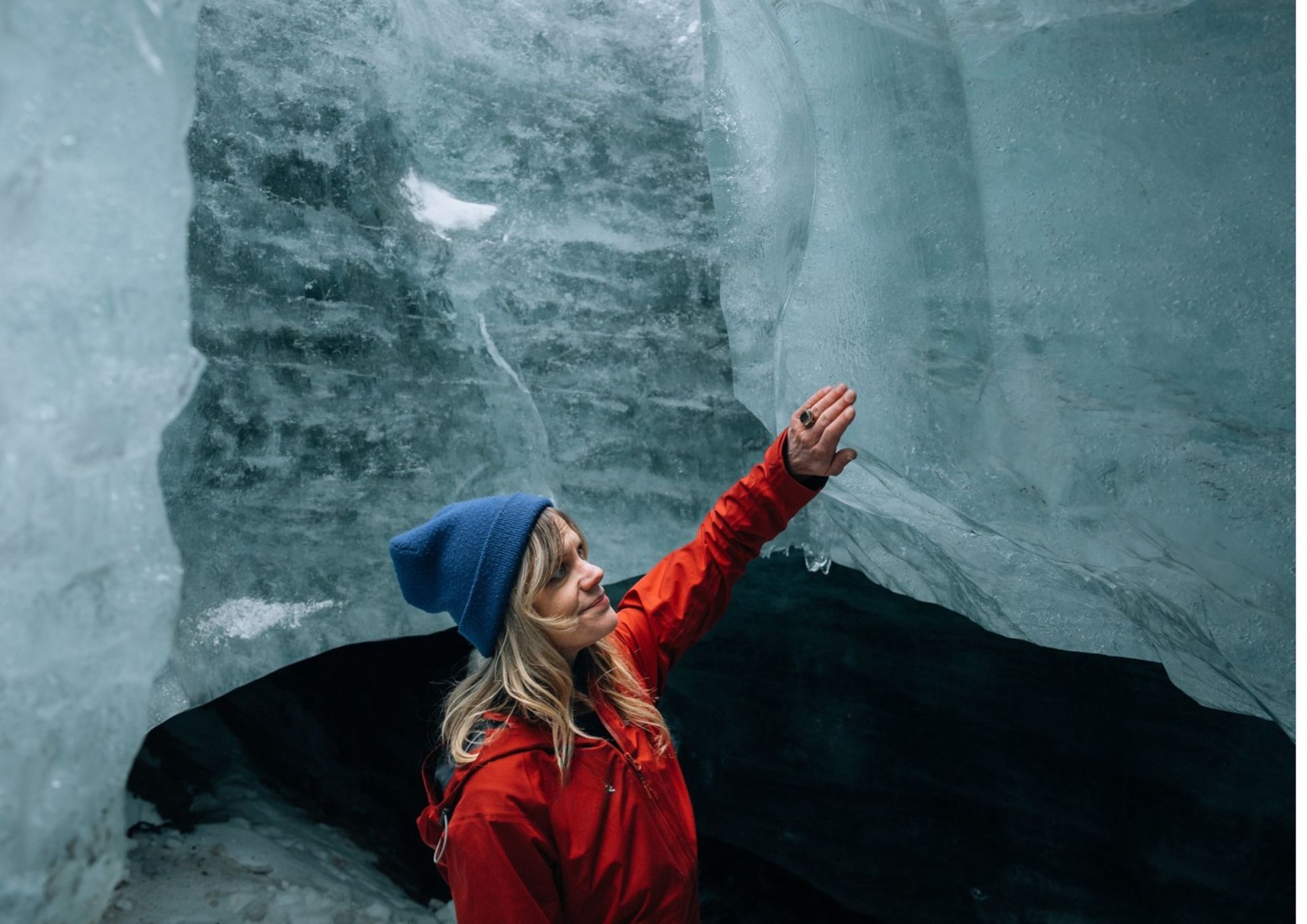
Quick answer: A natural ice cave is formed by meltwater flowing through a glacier, mainly during the summer months. As winter temperatures arrive, the cave becomes frozen and stable enough to be explored. This is why natural ice caves are only accessible to visitors during the winter season. And they change from year to year. A man-made ice cave, usually called an ice tunnel, is cut into the ice with machinery and can be maintained regularly to stay open all year round. Sleipnir's Neptune Ice Cave on Langjökull is natural.
Why does this distinction matter before you book?
Both are real experiences worth having, but they're not the same product, and the marketing around Iceland's ice caves doesn't always make that obvious. If part of what you want from an ice cave is that it's a genuine, natural glacier formation rather than a built attraction, it's worth knowing which one you're booking before you commit to a tour.
How can you actually tell a natural ice cave from a man-made one?
The clearest signals are how it formed, how long it's been open, and whether it looks the same as it did last year.
| Natural Ice cave | Man-made ice tunnel | |
|---|---|---|
| How it forms | Carved by glacial meltwater moving through the ice over time | Cut into the glacier with machinery |
| Shape | Irregular, organic, shaped by water flow | Smooth, consistent walls and ceiling |
| Changes over time | Yes - the shape, size and even the entrance can shift during a winter season | Yes and No — Re-carved periodically to counter glacier movement, but rebuilt to the same fixed design each time. |
| When it´s open | Only when the ice is stable, typically winter | Accessible throughout the year, maintained as needed |
| What you are seeing | The glacier´s own structure | The glacier's ice, shaped and finished by hand |
Why does a natural ice cave only open part of the year?
Because the glacier itself is constantly moving and changing, not a fixed structure. Through the summer, meltwater and glacial movement make the cave's roof and walls unstable, so it isn't safe to enter. When winter arrives, meltwater stops flowing through the glacier, and the consistently cold temperatures keep the cave stable enough for exploration. Each winter brings natural changes, so the cave may look quite different from the season before. Sleipnir's Neptune Ice Cave on Langjökull follows this natural seasonal cycle. It's open from 1 November to 15 April, when Langjökull is cold enough, meltwater has stopped flowing, and winter temperatures keep the cave stable enough to explore. The rest of the year it's closed, as spring and summer meltwater makes it inaccessible. That seasonal cycle is a defining feature of a genuine natural ice cave.
Is a man-made ice tunnel a lesser experience?
Not necessarily, and it isn't the goal of this article to argue that. A man-made ice tunnel offers a controlled, consistent environment inside the glacier. For travellers visiting Iceland outside the winter season, when natural ice caves are generally inaccessible, it's the only way to experience ice from inside a glacier at all. The point isn't which is better; it's that they're different things, built and maintained differently, and worth choosing between with that in mind rather than assuming every "ice cave" in Iceland is the same kind of place.
How is the Neptune Ice Cave on Langjökull formed?
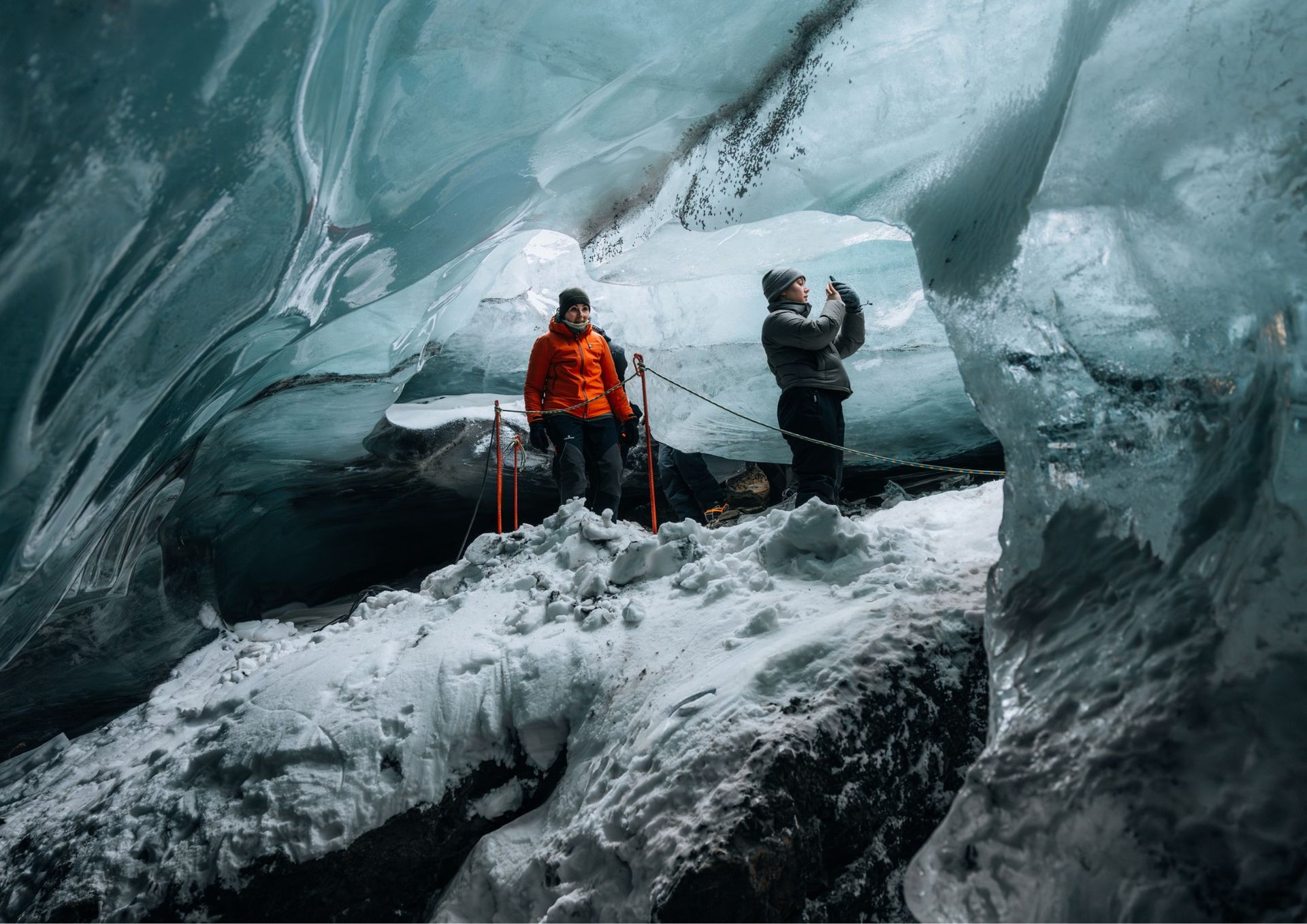
Neptune Ice Cave is formed when meltwater flows through cracks, channels and openings in a glacier during the warmer months. Over time, the moving water carves passages and chambers through the ice, creating a cave that changes naturally from year to year.
Each autumn, our team searches the glacier for a suitable natural ice cave. Once an opening is found, we explore the cave and assess its size, condition and accessibility to determine whether it is suitable for the upcoming winter season. Some preparation is needed to make the cave accessible, such as creating or improving steps, widening narrow passages where necessary, and installing lighting. The cave itself is entirely natural; our work is focused on making it possible for visitors to explore it safely and comfortably. The cave is named Neptune Ice Cave because the deep blue colour of the ice resembles the blue of the Neptune gemstone, while giving this particular natural ice cave its own distinctive name.
How do you actually get to a natural ice cave on Langjökull?
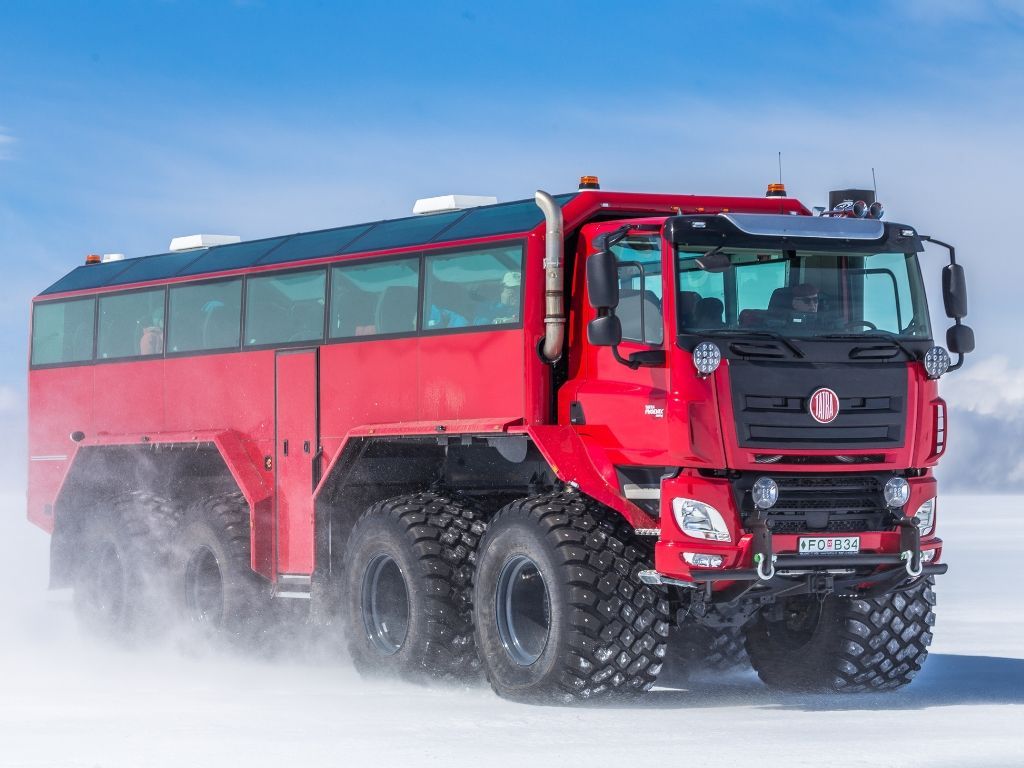
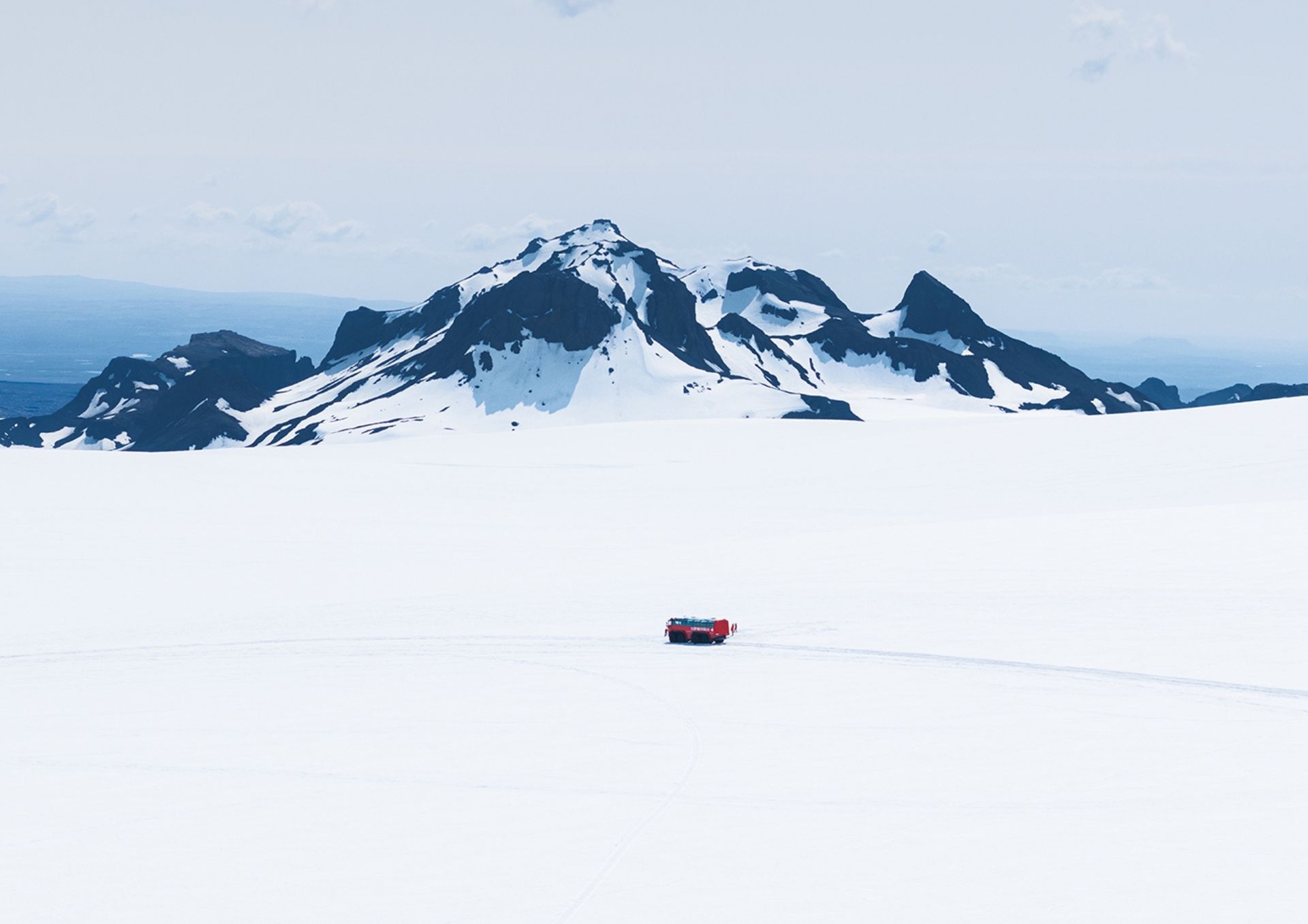
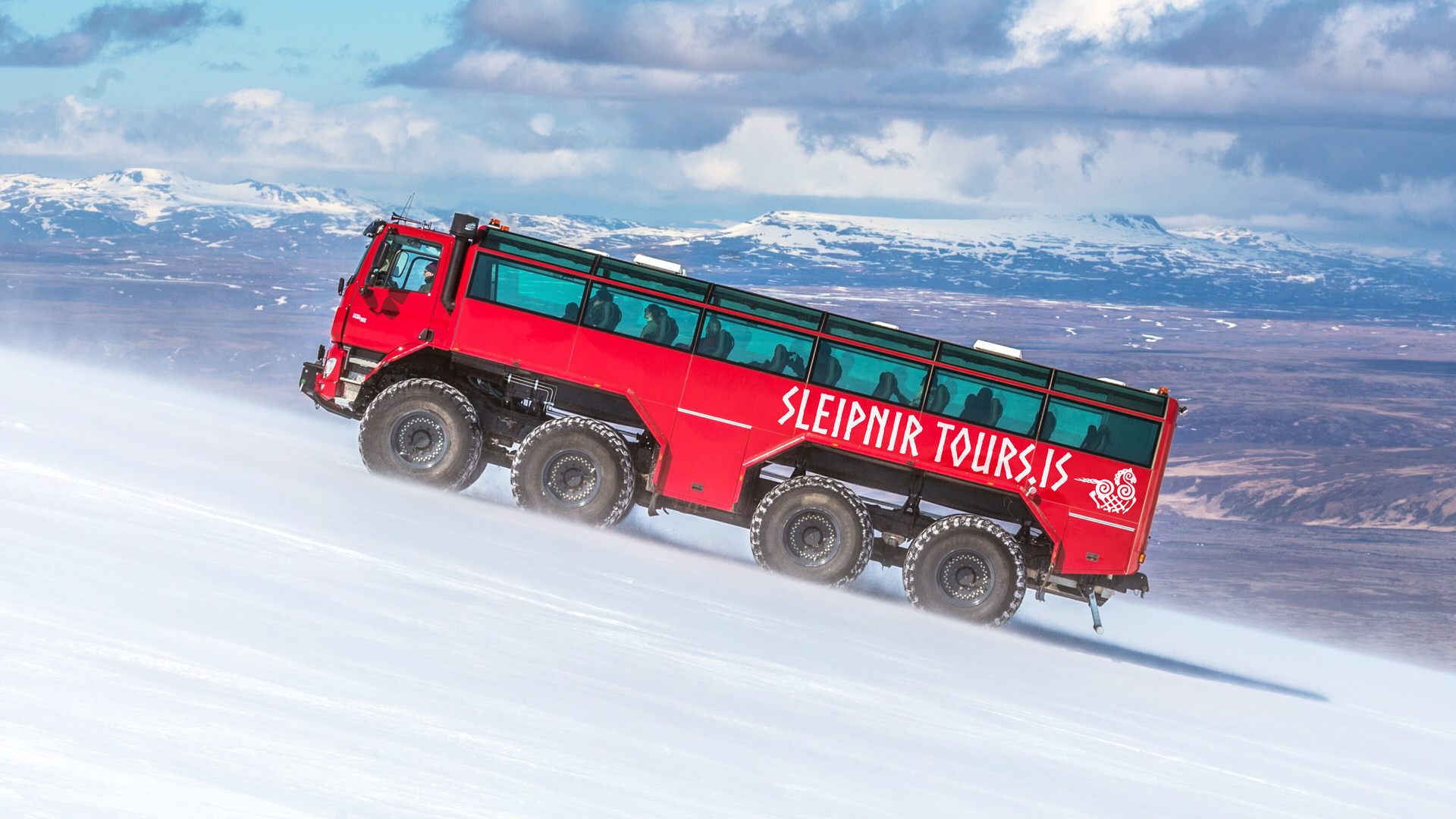
Sleipnir Glacier Tours reaches Neptune Ice Cave by Monster Truck from the upper parking area at Gullfoss. There is no hiking or snowmobile ride required to reach the cave. For a detailed, step-by-step look at the journey, see our companion article, How Do You Get to the Langjökull Ice Cave?
Frequently asked questions
Does a natural ice cave look different every time you visit? Yes. Because it's shaped by meltwater and glacial movement, the interior can shift from one winter to the next, and even within a season.
Is a natural ice cave less safe than a man-made one? Safety comes from professional guiding and monitoring, not from which type of cave it is. Natural ice caves are only opened to visitors once guides judge the ice stable enough, and closed the moment conditions change.
Can I visit both a natural cave and a man-made tunnel on one trip to Iceland?
Yes. Natural ice caves and engineered ice tunnels are different experiences and are usually offered as separate tours. Visiting both can be a great way to experience the difference between a cave formed naturally by the glacier and a tunnel created and maintained by people.
Does Sleipnir do anything to the ice cave itself?
Not to form it, that's entirely the glacier's work. Each winter our team does light preparation for visitor access: widening a tight passage, cutting a step, running lighting. The cave's shape and ice are untouched; what we adjust is how safely and comfortably you can walk through it.
How do I know which kind of cave a tour is selling?
Look carefully at how the operator describes the experience. A natural ice cave is formed by meltwater and follows a seasonal cycle, normally being accessible only during the colder winter months. An engineered ice tunnel is created or excavated by people and can offer a more controlled and consistent environment, often with access outside the natural ice cave season.
If you want to experience a genuine natural ice cave, Sleipnir’s Neptune Ice Cave on Langjökull is open from 1 November to 15 April. It is reached by Monster Truck from Gullfoss, with no hiking or snowmobile ride required.
See you onboard Sleipnir Glacier truck!

Share This Blog Post